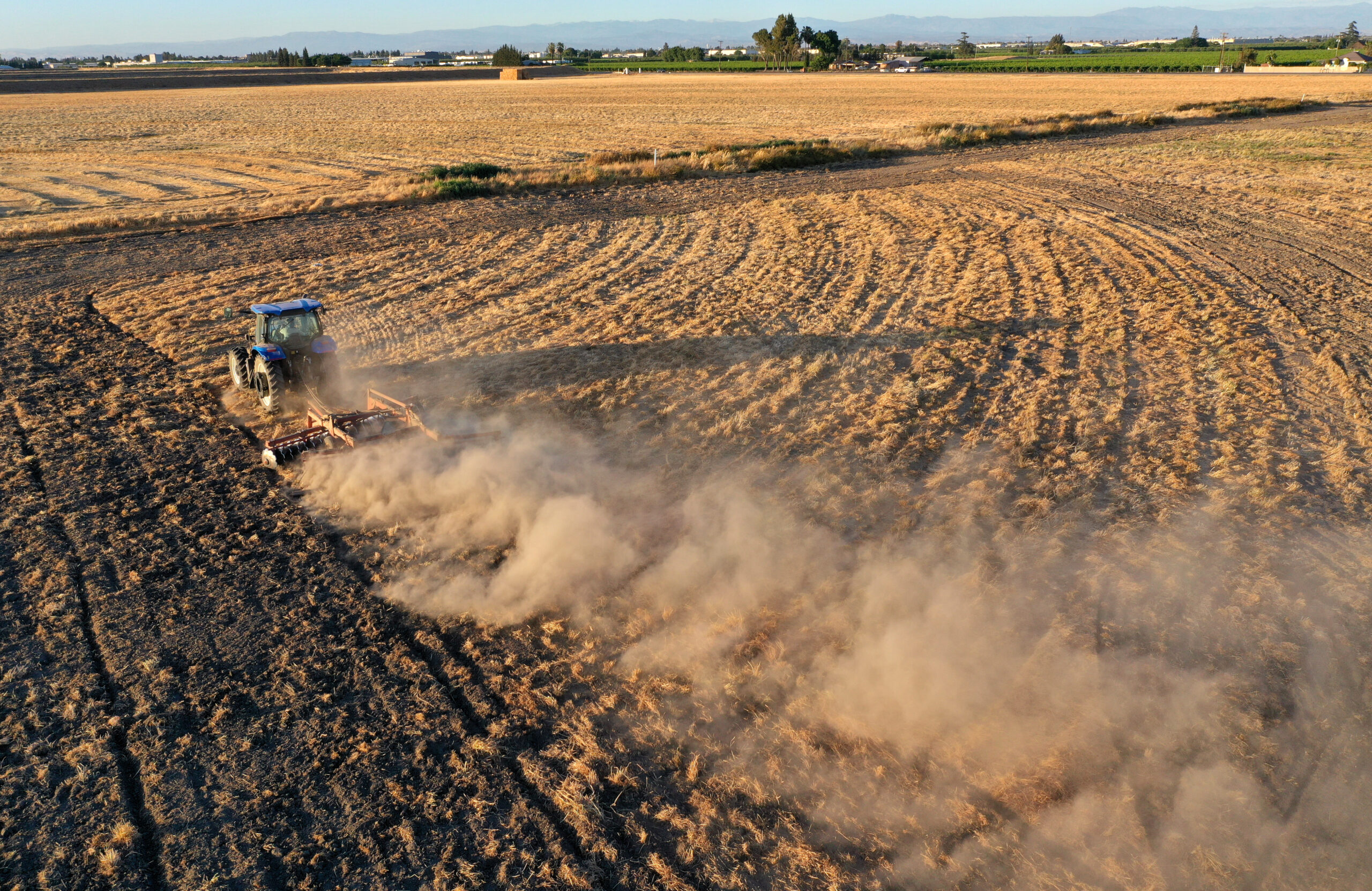
Drought conditions continue to affect large portions of the United States as farmers enter the growing season. Recent data shows that a significant share of the country is experiencing some level of dryness, with many regions facing moderate to severe drought. These ongoing U.S. drought conditions are shaping early-season decisions for farmers and influencing crop development across multiple states.
According to current data from U.S. Drought Monitor and Drought.gov, drought remains widespread across parts of the Midwest, Plains, and West. Soil moisture levels in these regions are lower than normal, which can limit early plant growth and reduce the effectiveness of spring rainfall.
Soil Moisture and Crop Development
Farmers rely on adequate soil moisture to support seed germination and early crop growth. Under current U.S. drought conditions, dry soil can delay planting or reduce crop emergence after seeds are planted. Crops such as corn, soybeans, and wheat require consistent moisture during early growth stages, making soil conditions critical during spring.
When moisture levels are low, seeds may struggle to establish roots. This can lead to uneven crop stands and lower yield potential later in the season. In some areas, farmers may need to wait for rainfall before planting to improve soil conditions.
Increased Irrigation and Input Costs
Drought conditions often increase reliance on irrigation systems. Farmers in affected regions may need to apply more water to maintain crop growth, raising operating costs. Under continued U.S. drought conditions, irrigation demand places additional pressure on water supplies and farm budgets.
Water availability varies by region, and some farmers face limits on how much water they can use. Reduced water access can force growers to adjust crop choices or reduce planted acreage.
Effects on Livestock and Pasture
Drought also impacts livestock operations. Dry conditions can reduce pasture growth, limiting available forage for cattle and other grazing animals. As a result, farmers may need to purchase additional feed, increasing production costs.
Reports show that pasture conditions in several regions have declined due to ongoing U.S. drought conditions. Lower forage availability can affect herd management decisions and long-term livestock planning.
Why Drought Conditions Matter
Current U.S. drought conditions highlight the importance of weather patterns in agriculture. Water availability plays a major role in crop yields, input costs, and overall farm productivity. If dry conditions continue, the impact could extend into harvest and influence food supply and pricing later in the year.
Farmers continue to monitor weather forecasts and soil conditions closely as the growing season progresses. Rainfall patterns in the coming weeks will play a key role in determining how crops perform under current conditions.
Farm Trader is committed to bringing you unbiased news based only on the facts. It is our job to keep you informed and only report what is really happening.
Sources:
- Drought.gov
- U.S. Drought Monitor